
Titanium vs Tungsten Rings: Which Is Right for You?
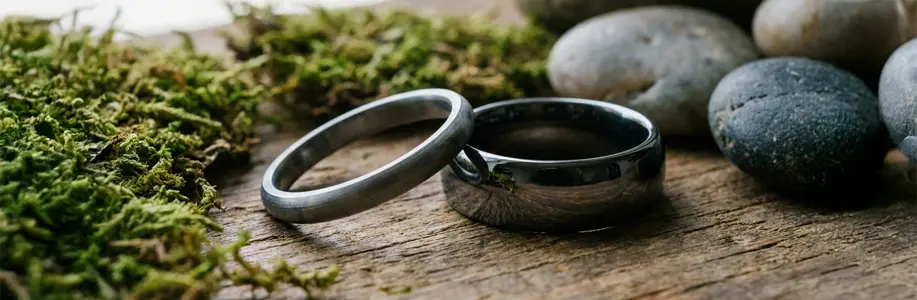
Titanium and tungsten are the two most popular alternative metals for men's rings, and choosing between them comes down to a handful of practical differences rather than one simply being "better." In short: tungsten is around two and a half times heavier and more resistant to scratching, titanium is lighter and takes a knock better, and neither can be resized once it's made. Here's what actually matters when you're choosing between them.
Weight and feel
The biggest difference you'll notice day to day isn't how the ring looks - it's how it feels on your hand. Tungsten is a dense metal, so a tungsten ring has real weight and presence - it's a weight you notice, substantial rather than heavy, in a way many people find reassuring rather than bulky. Titanium is roughly a third of the weight of steel and noticeably lighter than tungsten, so a titanium ring can feel like you're barely wearing anything.

This matters more than people expect for one specific group: men who haven't worn a ring before. If your hands aren't used to having something on them, a heavier ring is something you'll keep noticing, and for some people that becomes irritating rather than reassuring. This is the one situation where we'd actively steer someone towards titanium over tungsten - not because tungsten is worse, but because a lighter ring is easier to forget you're wearing while you get used to it.
Is either ring really "scratch-proof"?
Tungsten is genuinely hard to scratch. On the Mohs hardness scale it sits around 9 to 9.5 - close to diamond - compared with titanium at around 6. Tungsten also has a higher tensile strength (roughly 142,000 psi against titanium's 63,000 psi), which is part of why it holds a polished or brushed finish so well over time.
What we'd push back on is the word "scratch-proof," which you'll see used loosely by some sellers. No ring - tungsten, titanium, or anything else - is genuinely scratch-proof, and no ring will look exactly as it did on day one after ten years of daily wear regardless of what the marketing copy says. "Scratch-resistant" is accurate and worth something real; "scratch-proof" isn't a claim we're willing to make, because it isn't true.
Scratch-resistant isn't the same as shatter-resistant
This is the distinction that trips people up most. Tungsten's hardness makes it excellent against everyday scuffs, but that same hardness makes it more brittle under a sudden, hard impact - think a car door or a heavy tool, not everyday wear. Titanium is softer, so it picks up fine scratches more easily, but it flexes rather than cracking under that kind of impact.
In practice, based on what we actually see through returns and customer contact, cracked or shattered tungsten rings are rare - most people don't put their rings through that kind of impact, and the ones who do tend to already know to take it off first. What we do see more of is titanium rings coming back with visible surface scratching compared with tungsten. Neither of those things makes one metal "better" outright - they're just different trade-offs worth knowing about before you choose.
Can you resize a titanium or tungsten ring?
No - and this is worth being upfront about. Gold and silver are soft enough to stretch or shrink slightly, which is why those rings can usually be resized after purchase. Titanium and tungsten are prized for their strength, but that same strength means neither can be resized once it's made. We sometimes hear from customers who assume any ring can be resized the way a gold or silver one can - with titanium and tungsten, an exchange for a different size is the right route instead, which is exactly what our 90-day returns policy is there for.
Getting your size right the first time makes this a non-issue, so it's worth five minutes with a tape measure before you order - our ring size guide walks through how to measure accurately at home.
What about nickel and skin reactions?
Our titanium rings are made from commercially pure titanium, which is naturally low-reactivity and widely used in body-safe applications, including surgical and medical implants - one of the reasons it's often the more comfortable option for anyone with sensitive skin.
Tungsten rings are made from tungsten carbide, which needs a binding metal to hold the tungsten particles together - our tungsten rings use a small amount of nickel for this. It's bonded tightly into the structure of the ring rather than sitting loose on the surface, so most people wear tungsten without any issue. But if you already know you react to nickel specifically, titanium is the safer starting point rather than tungsten.
Which one should you choose?
If you want a ring with real weight and presence, and like having the widest choice of widths and designs, tungsten is the natural choice - our Classic Gold Tungsten Court Ring, available from 2mm up to 8mm, is our best-selling ring and a good place to start.

If you'd rather barely notice you're wearing a ring - especially if this is your first one, or you're active with your hands day to day - titanium is the better fit. The Polished Gold 6mm Titanium Ring is a straightforward, versatile starting point in that range.
Either way, take the time to get your size right first, since that's the one decision neither metal lets you undo later.
Browse the full range
You can browse the complete tungsten ring collection or the full titanium ring collection to see the full range of widths and finishes available in each.
